
A contrast between what is and what ought to be done
This post is coming a bit later than I had hoped as I have been hindered by hurricane Beryl wiping out our power for several days. I am finally back on power and Wifi, and I’m excited to share this post with you. In light of the recent storm, please pray for those who are particularly vulnerable or badly impacted by the storm, such as those whose house or cars were crushed by falling trees. Thank you. And now, to the post itself:
In classical philosophy and later in Christian thought, the transcendentals of Truth, Beauty, and Goodness were seen as the highest forms and most choice worthy of things to pursue. These three come in a trinity of ideas, which seems to echo the Trinity of Persons in God: the Father, the Son, and the Holy Spirit.
The Christian faith and the Bible assert and affirm that God is the ultimate form of the Good, the True, and the Beautiful. He is the source and creator of all good things, things such as the universe, nature, plants, animals, humans, and order. In Genesis 1, he says that his creation is “very good.” The Hebrew word here, tov, suggests moral excellence and surpassing beauty.
We believe the Scriptures are “God-breathed” (2 Timothy 3:16). They are his creation, and are thus a pure expression of God’s truthfulness and the beauty of his being. This indicates that God is indeed surpassingly truthful, beautiful, and good.
God created humans in his own image (Genesis 1:27). Being created in the imago Dei, mankind is meant to reflect God’s character and attributes, including his creatorship and his truthfulness, beauty, and goodness.
If we are to piously seek and follow our purpose as human beings, our works in every field should be truthful, good, and beautiful. To lie is not only anti-Christian, it is anti-human. To promote vice or immorality likewise works against the human telos, or ultimate purpose. To create works that are ugly in any way that does not accord with the truth is, once again, hateful to humanity.
Now, these works I allude to do not only include special acts of charity or kindness. They include every possible act of creation or work, whether it be governing a city, raising children, doing the dishes, going to the gym, being a teacher or instructor, writing a book, or designing a building… The list goes on forever. Thank God for the beautiful variety of activities and skills every human is called to occupy!

Modernist Architecture and its Lack of Beauty
With all of this in mind, we must consider an example of how these principles come into action.
It does not take great effort to see that most buildings designed and built in the last half of the 20th century and onward are not built with an objective, transcendent beauty as the standard.
Look around you. If you live in suburban America, take a short drive through your neighborhood and then by some strip malls. Tell me what percentage of the buildings you see sparks curiosity or enjoyment of the aesthetic details. The truth is that that percentage is likely quite low.
A few other poignant examples of this ugliness can be seen in buildings like the Boston City Hall, any large parking garage, or Le Corbusier’s (thankfully not implemented) monstrosity of a plan to demolish and rebuild the city of Paris with identical concrete high-rises, absolutely disrespecting the urban fabric of France’s beautiful capital city.
When you compare these examples to beautiful cities of previous centuries, like Paris, Rome, Vienna, or Utrecht in the Netherlands, you can easily see that there has been a radical paradigm shift in how architecture and urbanism are done.
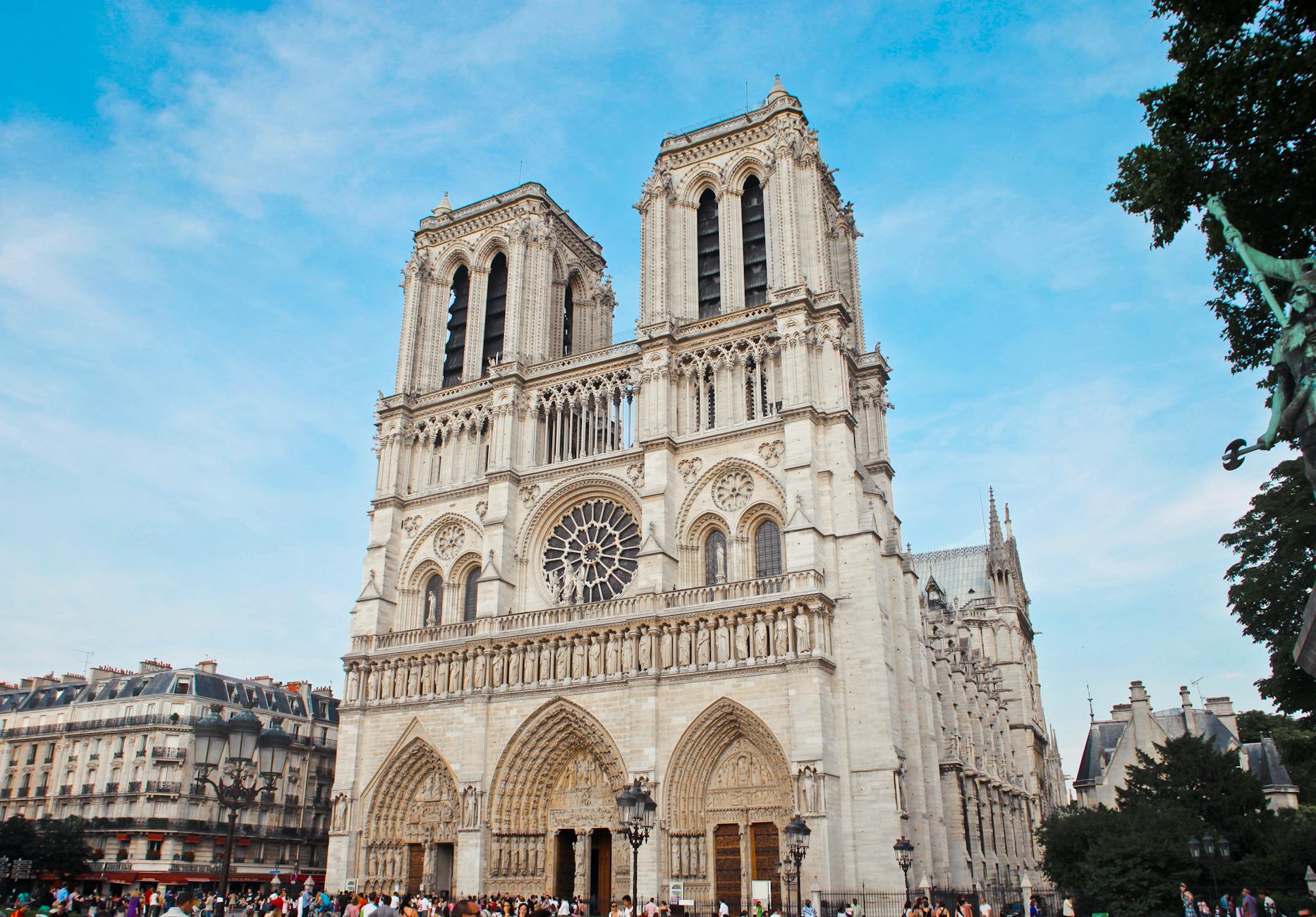
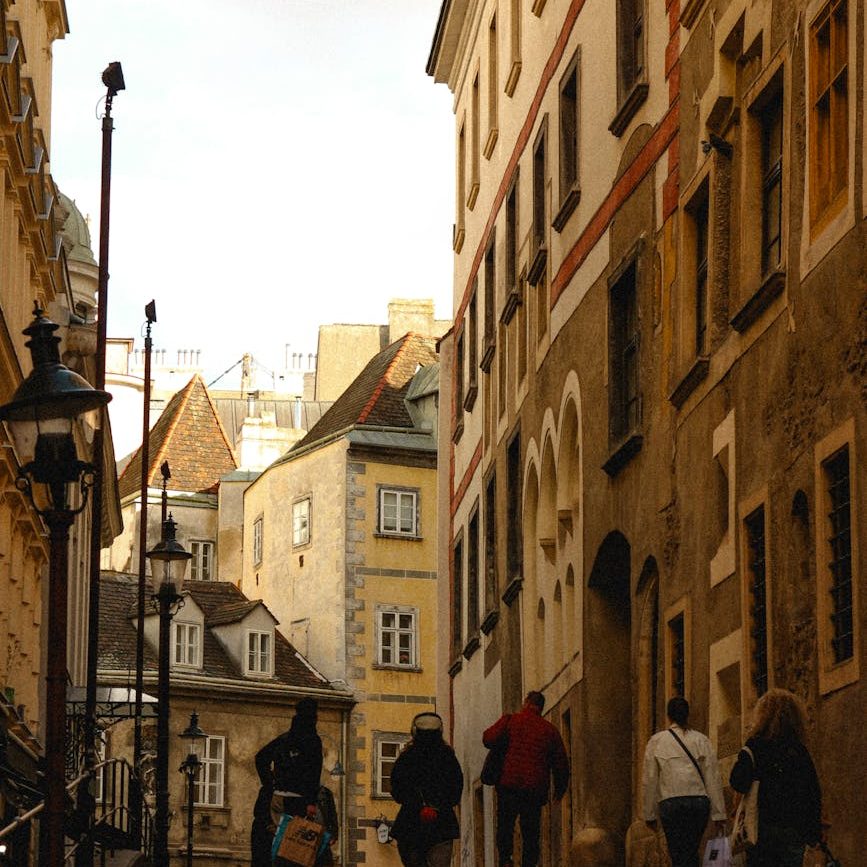

There are many reasons for this shift, from the new reliance on automobiles to the modernist idea of rejecting the past and labeling beauty as a subjective category determined by taste. I will not go into too much detail on these reasons, but will instead recommend a few excellent podcasts that will help you educate yourself on why modern cities are often so ugly, and what it takes to make a beautiful, thriving city.
Among these podcasts I highly recommend The Aesthetic City with Ruben Hanssen, Beauty and the Faith with Magnus Gautestad, and the Building Culture Podcast with Austin Tunnell.
You may be wondering at this point, “What can I do to impact the culture in favor of Truth, Goodness, and Beauty in the built environment or elsewhere?”
This is my answer:
- Educate yourself. Listen to podcasts like the ones I mentioned, read books and articles, seek experience in traditional crafts.
- Travel to beautiful cities. Study the vernacular building styles and urban landscapes and enjoy the cultures of well-built cities like Paris, Rome, Vienna, Utrecht, Charleston, SC, and Washington, D.C., and explore the rich culture and history of fascinating places like Mont Saint-Michel in Normandy or Assisi in Umbria.
- Influence people you know. Explain what you learn to your friends and family first, then let it grow to any larger platforms you occupy. Show people that beauty is possible, imperative, and that ultimately “Beauty will save the world.” (Dostoevsky) Look into the schools that are teaching traditional principles in architecture and urbanism and give those places publicity and recognition for their noble efforts.
Overall as a society, we must recognize that ugliness in the built environment will always bring down humanity whereas beauty will uplift us. We must fight together to oppose any works or creations that are antithetical to Truth, Beauty, and Goodness.
 Kyrie Eleison
One response to “The Transcendentals and the Built Environment”
Thomas, this is an interesting and thought-provoking blogpost. Good job!
LikeLike